By Isabella Ferrante
There is a particular quality to a late-summer afternoon in Carmel-by-the-Sea, when the marine layer has burned off the rooftops and the light turns the color of honey against the white cypress and the storybook cottages. The village empties of its midday hurry. And if you know where to look, you can spend the whole golden stretch of it doing something this square-mile town does better than almost anywhere in California: tasting the wines of Monterey County without ever starting your car.
Carmel holds one of the densest concentrations of tasting rooms in the state — more than a dozen of them, scattered among the courtyards and side streets within a few walkable blocks. They belong not to distant corporate labels but to the growers and winemakers of the Peninsula’s own country: the Santa Lucia Highlands, the Carmel Valley benchlands, the wind-scoured ridges above the sea. To walk from one to the next is to travel the region’s viticulture in an afternoon, glass by glass, and to meet the people behind each pour without the drive inland.
The unhurried art of the wine walk
For years, the ritual had a name and a small booklet to go with it: the Carmel Wine Walk-by-the-Sea, a passport that let visitors sample their way through the participating tasting rooms at their own pace. The passport, sold through the Carmel Visitor Center, was never meant to be rushed — you could spend your tastings across a single luxurious afternoon or dole them out one a month across a season. That spirit endures even as the format has evolved toward a simpler, mobile guide to the village’s rooms. The essential invitation is unchanged: go slowly, taste widely, and let discovery set the pace rather than a schedule.
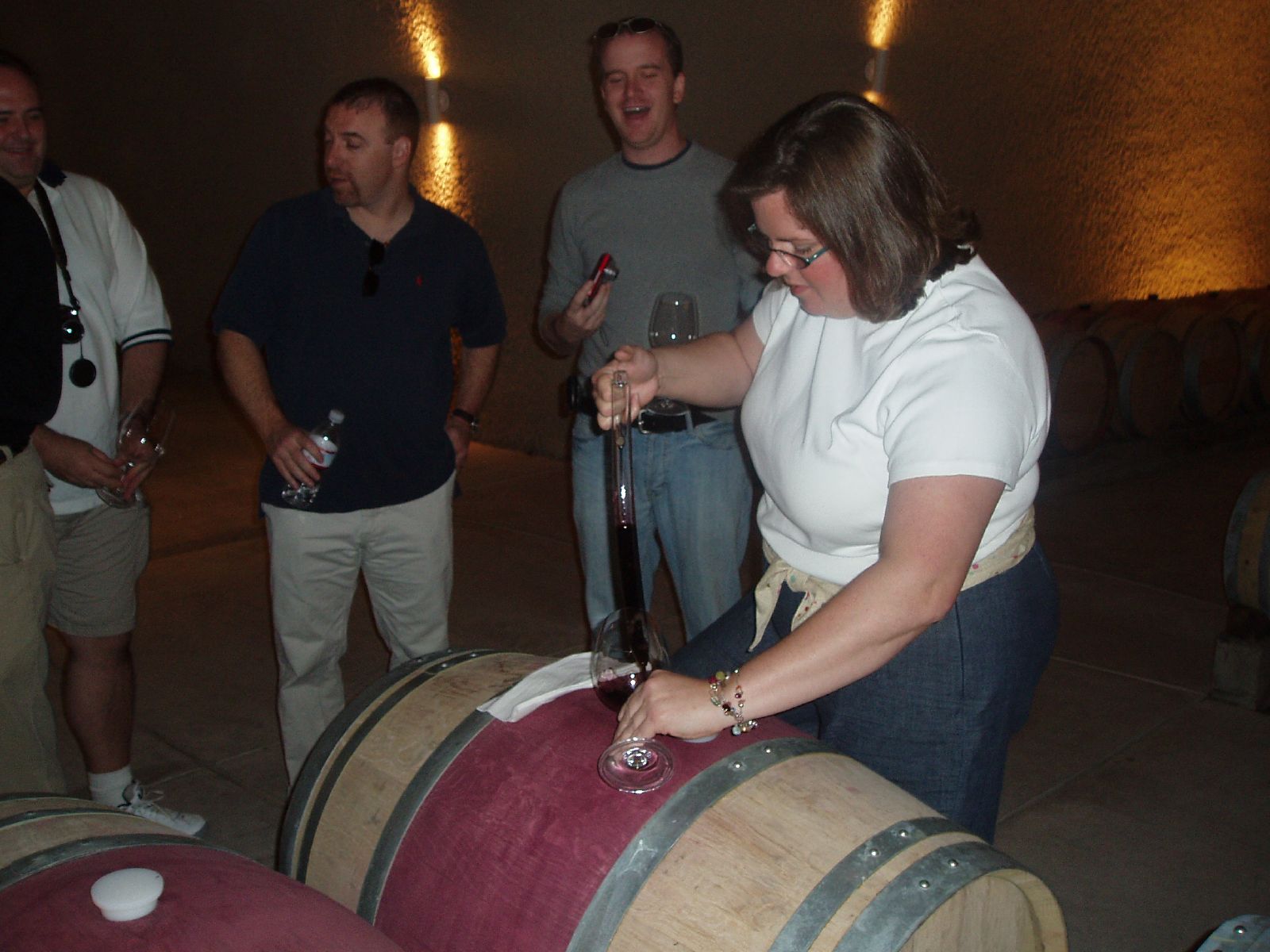
This is the way wine is meant to be met. Not in a checklist of appellations conquered, but in conversation — with the person behind the bar who can tell you which block a Pinot came from, why the fog matters, how the last harvest compared to the one before. In Carmel, that conversation is remarkably easy to find. The rooms are small, the pours are generous of attention if not of volume, and the walk between them is part of the pleasure: a few minutes of sea air and window-shopping to reset the palate before the next.
A country of cool nights
To understand what fills the glasses here, it helps to know the ground they come from. Monterey County is one of the great cool-climate winegrowing regions of the American West, shaped by the deep cold of Monterey Bay, which draws afternoon wind and fog up the Salinas Valley like a natural air conditioner. The Santa Lucia Highlands, the county’s most celebrated appellation, earned its federal recognition in 1992 after a small band of pioneering farming families — the Hahns, the Smiths at Paraiso, the McFarlands at Sleepy Hollow — recognized in the 1970s what these southeast-facing terraces could do. Today, more than four thousand acres climb those slopes, and Pinot Noir is the district’s signature: perfumed, structured, unmistakably of a cold place.
The Monterey County Vintners & Growers Association, which has spent more than half a century championing this country, counts the region’s plantings back to the 1790s and the first mission vineyards. That long memory is worth carrying with you as you taste. The wines in Carmel’s tasting rooms are the current chapter of a very old coastal story.
Where the afternoon might take you
Begin, perhaps, at Scheid Family Wines, whose family stewards one of the largest vineyard holdings in the county. Their Carmel room pours a portfolio broad enough to orient a newcomer — Pinot Noir and Chardonnay alongside Cabernet and the occasional experimental bottling — a fitting first stop to calibrate the palate to Monterey’s range.
From there, the pleasures grow more intimate. Dawn’s Dream makes approachable, Pinot-forward wines with a warmth that mirrors its room, a place built for lingering rather than hurrying. A few steps on, De Tierra Vineyards offers an estate-minded lineup — Chardonnay, Merlot, Syrah — from a family that speaks openly about its farming as much as its winemaking.
Wrath Wines, with vineyards rooted in the Santa Lucia Highlands, is the room for those who like structure with their fruit; its Pinot Noir and Chardonnay carry the tension and drive that mark the appellation at its best, poured in a setting small enough to feel like a private tasting. And for a final glass, few rooms in the village tell a more remarkable story than Albatross Ridge.
The vineyard the wind remembered
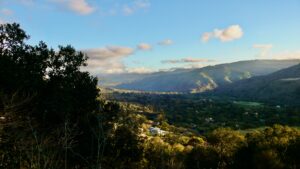
The Albatross Ridge tasting room sits on Dolores Street, but its wines come from a rolling Carmel Valley ridge some twelve hundred feet above the Pacific, planted in 2008 by father and son Brad and Garrett Bowlus. Garrett makes the wine; the estate’s Pinot Noir and Chardonnay carry the mineral cut and structure that high, rocky, ocean-facing ground tends to give.
The name is where the story turns luminous. After planting the vineyard, the Bowluses went looking through a local history book for something to call it — and discovered that Brad’s grandfather, the pioneering aviation engineer William Hawley Bowlus, had flown his sailplanes off these very ridges in the 1930s, riding the same ocean winds that now cool the vines. Bowlus’s gliders are in the Smithsonian; his most famous design was called the Albatross. Three generations later, unknowingly, his descendants had come back to the same slope and rooted a vineyard in it. To taste the wine with that knowledge is to taste the wind itself — the thing that first drew the family to this ridge, and the thing that still shapes what grows there.
The pleasure of staying put
That is the quiet gift of Carmel’s tasting rooms. Elsewhere, wine country asks you to drive, to plan, to choose. Here, the country comes to the village, gathered into a handful of walkable blocks where the winemaker’s daughter might pour your glass and the vineyard’s whole history fits into a single afternoon’s stroll.
Take the long way between rooms. Let the fog decide when it lifts. Order the extra taste of the Pinot you can’t stop thinking about. The best way to know this coast is not to hurry through it but to let it unfold at the pace of a walk by the sea — one pour, one conversation, one honeyed hour at a time.
The village’s tasting rooms keep their own seasonal hours; the Carmel Visitor Center on San Carlos Street can point you to current offerings and the Carmel-by-the-Sea Wine Walk guide.