By Isabella Ferrante
Some winemakers begin with a vision of the wine they want to make and go looking for grapes to match. Ian Brand works the other way around. He begins with the land — specifically, the forgotten corners of it: an old vineyard half-lost on a limestone ridge in San Benito County, gnarled vines planted decades ago and quietly farmed ever since, sites that the fashion of the wine industry passed over on its way to somewhere more famous. Where others see obscurity, Brand sees unfinished sentences. His life’s work has been completing them.
The results have not gone unnoticed. In 2018, the San Francisco Chronicle named Brand its Winemaker of the Year — a striking honor for a vintner working not in Napa or Sonoma but out of a warehouse in Salinas, from vineyards scattered across Monterey, San Benito, and Santa Cruz counties. For readers of this magazine, though, the more useful address is the one in Carmel Valley Village, where the I. Brand & Family tasting room pours the evidence: three labels, dozens of small-lot wines, and one of the most quietly compelling arguments anywhere for what this stretch of California can be.
Brand’s path into wine was refreshingly unvarnished. There was no château apprenticeship, no enology degree. He started in 2003 on the bottling line at Bonny Doon Vineyard, the famously freethinking Santa Cruz winery, and worked his way inward — first the lab, then the cellar, learning the craft the way tradespeople have always learned it: by doing every job in the building. From there he sharpened his skills at Big Basin Vineyards in the Santa Cruz Mountains, absorbing the lessons of California’s cool-climate Rhône pioneers. By 2009, he and his wife, Heather, were making wine under their own name — two hundred cases, produced on borrowed equipment and long nights. Within a decade the family operation had grown into a many-thousand-case winery, built from scratch in that Salinas warehouse, with Brand improvising machinery and working punishing harvest schedules while he built something rarer than a brand: a point of view.
That point of view is easiest to understand through his three labels, which function like chapters of the same book. Le P’tit Paysan — “the little peasant” — is the everyday volume: honest, French-village-styled wines meant for the table rather than the trophy shelf. La Marea — “the tide” — explores Spanish varieties from distinctive coastal sites, above all albariño and grenache, grapes whose affinity for Monterey’s cold, windblown ground Brand grasped earlier than almost anyone. And at the summit sits I. Brand & Family, the label reserved for the rare and truly old-vine sites he has spent his career seeking out — cabernet franc, mourvèdre, chardonnay, cabernet sauvignon from vineyards with more history than acclaim. The stylistic through-line across all three is restraint: wines of freshness, structure, and place, made by someone who trusts his vineyards enough not to shout over them.
The vineyards are the heart of the matter. Brand has become the Central Coast’s foremost advocate for its overlooked sites — the old plantings of the Cienega Valley and the limestone-veined hills of San Benito County, the high, austere ground near Chalone, the odd parcels of Monterey County that never made it into anyone’s marketing plan. Much of this land was planted generations ago and survived on the devotion of farming families rather than the attention of critics. Finding such places takes years of back roads and conversations; earning the fruit takes longer. Brand has done both patiently, and in doing so has performed a kind of viticultural preservation — because an old vineyard that no one vinifies seriously is an old vineyard that eventually gets pulled out. Every bottling from one of these sites is, in a real sense, an act of stewardship: proof that the vines deserve to stay in the ground.
Taste through the lineup and the geography comes alive. An albariño that carries the cold salinity of a vineyard within reach of the bay’s influence. A grenache with the sinew and perfume that only struggling, well-drained soils produce. A cabernet franc from old San Benito vines that has drawn comparisons to far more exalted addresses — herbal, savory, structured, unmistakably itself. These are not wines engineered toward a score. They are translations, as faithful as Brand can make them, of places most drinkers have never heard of. That, precisely, is the pleasure.
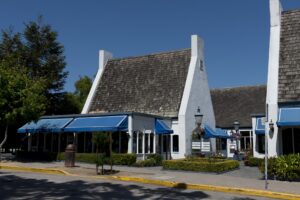
The tasting room in Carmel Valley Village is where the whole project becomes personal. Set at 19 East Carmel Valley Road, in the sunny heart of the village — a fifteen-minute drive from Carmel-by-the-Sea, past oaks and pasture — it has poured the family’s wines since 2017. The room shares the unpretentious spirit of the labels: come as you are, taste across all three tiers, ask questions. On a good afternoon you may find yourself deep in conversation about soil types in a valley you could not place on a map an hour earlier. That is the Brand effect. He makes evangelists of casual visitors, not through salesmanship but through the wines’ own quiet insistence that the Central Coast’s story is bigger and older than its reputation.

Monterey County has long lived in the shadow of California’s more celebrated wine regions, its fruit historically shipped north to disappear into other people’s blends. Winemakers like Brand are the correction — proof that the vines were never the problem, only the attention paid to them. Fifteen years into the family venture, the warehouse in Salinas hums each harvest with fruit from vineyards that once had no champion at all. They have one now. Spend an hour in the Village with a flight of his wines, and you will understand why the vineyard whisperer’s greatest talent may be the simplest one: he listens.
The I. Brand & Family tasting room is located at 19 E. Carmel Valley Road, Carmel Valley Village. ibrandwinery.com