The gate catches you off guard every time. You pull up expecting a toll booth and get something closer to a portal — a uniformed attendant, a striped barrier arm, and then the road opens up and within a quarter mile you’re watching the Pacific hammer granite the color of old bones. That’s the 17-Mile Drive in its first thirty seconds, and it only gets better from there.
This guide is written for people who want to do it properly: which gate to enter, which stops are genuinely worth slowing down for, what the fee actually costs (and how to get it back), and which moments most tourists drive straight past without noticing.
What Is 17-Mile Drive?
The 17-Mile Drive is a private scenic road that winds through the Del Monte Forest and Pebble Beach community on the Monterey Peninsula, managed by the Pebble Beach Company. It connects Pacific Grove on the north with Carmel-by-the-Sea on the south, threading through some of the most photographed coastline in California — past championship golf courses, centuries-old Monterey cypress trees, and a wild, working shoreline where harbor seals haul out on the rocks and sea otters float in the kelp below the cliffs.
The drive itself is roughly 17 miles end to end, though most visitors stop far more than they drive — hopping out at overlooks, walking short trails to the water’s edge, and lingering at viewpoints that don’t look real until you’re standing in them.
17-Mile Drive Entrance Fee and Hours
The entrance fee is $12.50 per vehicle, collected at any of the five gates. Cash or card accepted.
Here’s the part most first-timers don’t know: that $12.50 is fully reimbursed when you spend $35 or more at any Pebble Beach Company restaurant during your visit — including The Tap Room at the Lodge, Roy’s at Pebble Beach, or The Inn at Spanish Bay’s restaurant. A proper lunch at The Tap Room easily clears $35, which means your entire drive is effectively free with a good meal. Hand the server your gate receipt and they take it right off the bill.
- Hours: Sunrise to sunset, daily
- Fee: $12.50 per vehicle (reimbursed with $35+ restaurant purchase at Pebble Beach Company dining)
- Bicycles: Permitted with a $5 fee at the gate
- Motorcycles: Not permitted on the drive
- Gas stations: None on the route — fill up in Carmel or Pacific Grove before you enter
Which Gate Should You Enter?
Five entry gates serve the 17-Mile Drive, and the one you choose shapes the entire experience.
Carmel Gate (N. San Antonio Ave & 2nd Ave, Carmel) is the best choice if you’re coming from Carmel-by-the-Sea or Highway 1 from the south. Entering here puts Lone Cypress among your first major stops rather than your last — the light falls well on it in the morning, and the drive flows naturally northward toward Spanish Bay and the bagpiper at the end of the day.
Pacific Grove Gate (Sunset Dr & 17-Mile Dr, Pacific Grove) is the logical entry if you’re coming from Monterey or Highway 1 from the north. It drops you at Shepherd’s Knoll, which is a strong opening panorama, and the route unspools south toward Carmel from there.
The three remaining gates — Country Club Gate, Pebble Beach Gate, and Hwy 68/Holman Gate — are functional but less natural as starting points for a first visit. Most first-timers do best choosing between Carmel Gate and Pacific Grove Gate based on their direction of travel.
The Must-See Stops on the 17-Mile Drive
The official Pebble Beach map lists 26 points of interest. Here are the ones that earn a genuine stop — and one that almost nobody bothers with that you absolutely should.
Shepherd’s Knoll
If you enter from Pacific Grove, this is your first panoramic payoff: a hilltop overlook inside the cypress forest with views north across Monterey Bay all the way to Santa Cruz on clear days. It faces north rather than west, which means it’s almost always quieter than the coastal stops. Look for the pullout on your left — it’s easy to roll past.
Hummingbird Lane
A short stretch shaded by Monterey cypress — gnarled, wind-sculpted, thickly lichened — that gives you a sense of how the forest looks before the road breaks out onto the coastal bluffs. Worth a slow roll even if you don’t stop.
Seal Rock and Bird Rock
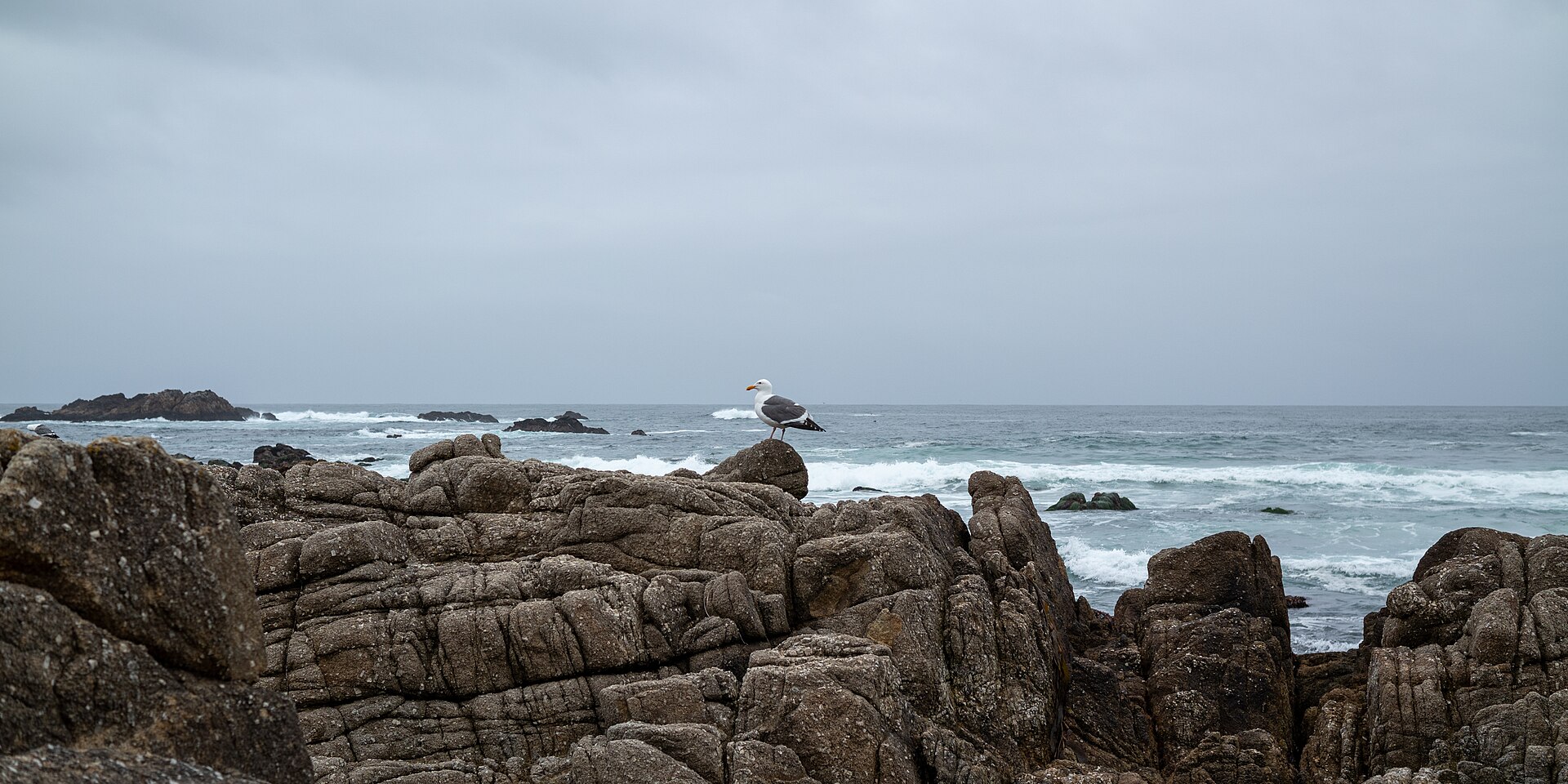
Two offshore rock formations where harbor seals and California sea lions haul out year-round. Numbers swell dramatically in winter and spring. Bring binoculars — the rocks sit offshore and the animals are easier to identify up close. Brandt’s cormorants nest here in spring alongside brown pelicans that look prehistoric perched on the guano-whitened ledges.
Fanshell Overlook
The best stop for late-afternoon light on the entire Pebble Beach drive — the kind of light that turns the water pewter and gold simultaneously. From April through June, the beach below is closed to visitors because harbor seals use it as a pupping ground. The overlook stays open, and watching a beach full of seal pups from the bluff above is one of the more affecting wildlife moments on the peninsula.
Cypress Point Lookout
This is the stop most tourists skip, which is exactly why you should go. Situated near the legendary 15th hole of Cypress Point Club — a private course, so no golf access — the view here looks straight out to open ocean with nothing between you and Japan. On big-swell days, the water erupts off the rocks in white columns twenty feet high. On calm days it’s a mirror. Almost nobody is ever here. Give it fifteen minutes minimum.
The Lone Cypress
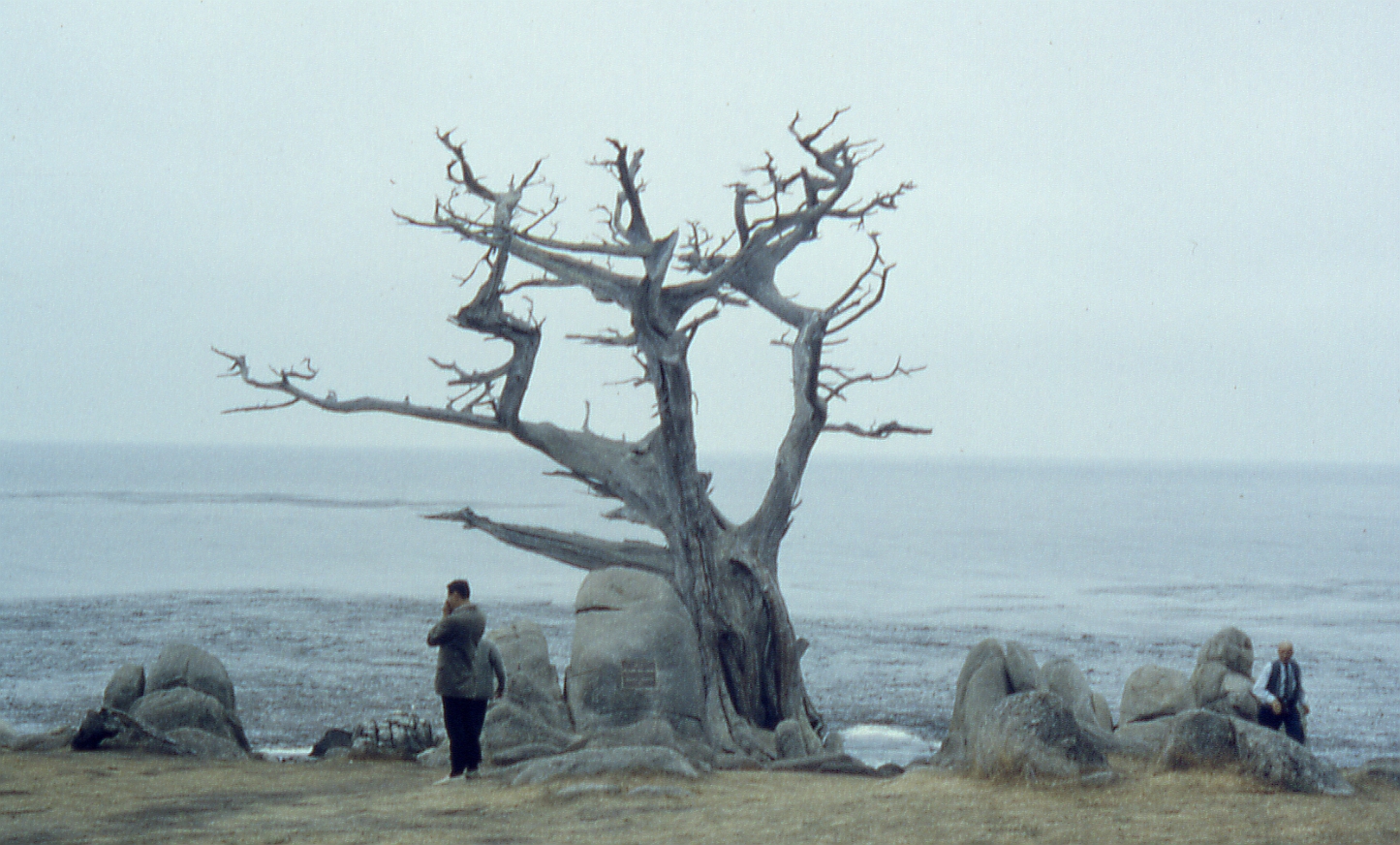
The most photographed tree on the California coast, and the trademarked symbol of the Pebble Beach Company — yes, legally trademarked. You can photograph it freely for personal use, but commercial use of the image requires licensing from Pebble Beach. The tree is roughly 250 years old, anchored to a granite outcropping above the surf, now supported by cables that keep it from toppling. It’s fenced off to protect the root system, so you view it from a small overlook rather than up close. The distance is part of the effect: one tree, one rock, open ocean, big sky. There’s a reason this image persists.
Ghost Tree
A cluster of bleached, near-white Monterey cypress at the water’s edge near the 18th hole of Spyglass Hill, named for the pale color of their bare limbs. On foggy mornings the effect is genuinely eerie. On clear days the turquoise water behind them is something else entirely. The walk from the parking area takes about ten minutes, and most cars don’t pull in.
Pescadero Point
A rocky headland at the southern end of the drive with a wide view back toward Fanshell and north up the coast. Good for watching surf break over the underwater reef. Sea otters are frequently spotted floating in the kelp beds just offshore — look for small dark shapes that don’t move like birds or seals, often wrapped in kelp to anchor themselves while they sleep.
Stillwater Cove and The Lodge at Pebble Beach
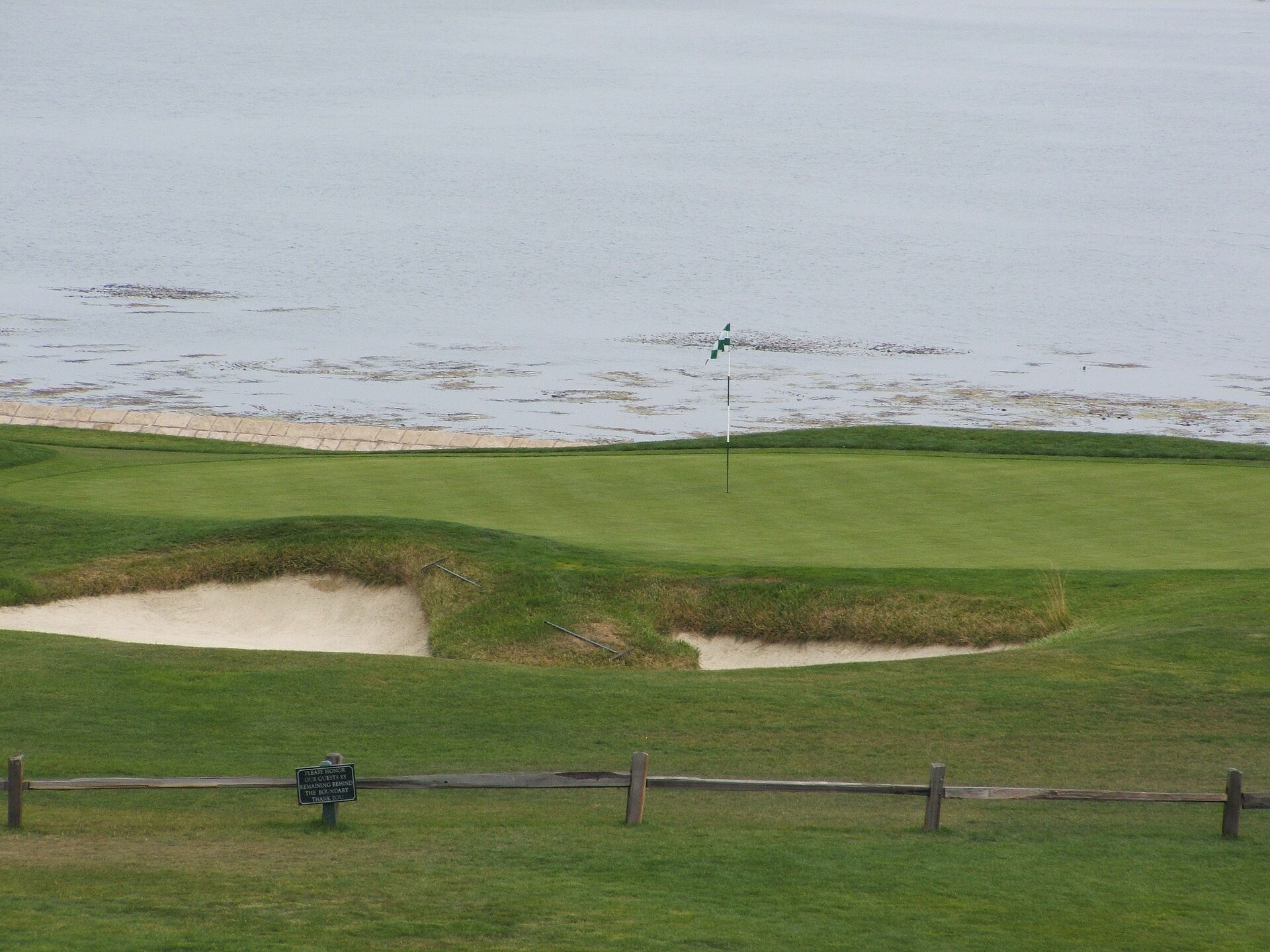
The Lodge anchors the southern section of the drive — a grand resort built in 1919, with a terrace that looks directly down the 18th fairway toward the Pacific. The grounds are open even if you’re not staying, and The Tap Room bar and grill is exactly where you should redeem that $35 lunch credit. Stillwater Cove just south of the Lodge is a sheltered beach popular with kayakers and snorkelers, and the site where Pebble Beach Pro-Am gallery crowds walk between holes during tournament week.
Spanish Bay and the Bagpiper Tradition
The Inn at Spanish Bay sits on a stretch of restored dune habitat on the northern end of the drive, and the resort’s signature ritual is one of the genuinely lovely traditions on the Monterey Peninsula: every evening at sunset, a lone bagpiper in full Highland dress walks the 18th fairway of the Links at Spanish Bay, playing a lament as the sun goes down over the water. It lasts about fifteen minutes. It is completely sincere. If you time your visit to arrive at Spanish Bay near sunset — generally 6–8 PM depending on the season — you can watch it from the beach walkway without a room reservation. Sunday evenings tend to be particularly festive. It’s one of those things that sounds overwrought until you’re standing there watching it happen.
Wildlife You’ll Actually See
The 17-Mile Drive Carmel guide should be upfront about this: the wildlife is real, not decorative. Harbor seals use these rocks and beaches as active haul-outs and pupping grounds — in spring you may watch pups learning to swim in the surge channels below Fanshell. California sea lions are louder, larger, and more animated; they tend to dominate the outer rocks at Seal Rock and Bird Rock. Sea otters are present year-round in the kelp beds, floating on their backs, cracking shellfish on their chests. Brown pelicans and Brandt’s cormorants are the primary seabirds; Western gulls, pigeon guillemots, and black oystercatchers complete the picture for anyone keeping a list.
The Monterey Cypress: An Ecological Rarity Worth Knowing About
Monterey cypress (Hesperocyparis macrocarpa) grows naturally in exactly two places on Earth: the Pebble Beach coastline along the 17-Mile Drive, and Point Lobos State Natural Reserve, about five miles south of Carmel. Everywhere else you see Monterey cypress — in parks, gardens, and windbreaks across coastal California — those are planted specimens. The ones here are original, wild, and shaped entirely by salt wind and coastal fog over centuries. That’s what gives them their particular look: not picturesque decay, but active adaptation. The gnarled, salt-sculpted forms you’ll photograph here are a species in its native habitat, doing what it has always done. Only two places on Earth. That’s worth knowing when you’re standing under them.
Tips for Getting the Most Out of Your Visit
- Morning for wildlife. Harbor seals and otters are most active before 10 AM. Fog is common until late morning in summer and burns off to spectacular clarity — don’t let early gray discourage you.
- Late afternoon for photography. Golden-hour light before sunset turns the cypress and coastal granite warm and directional. This is when the Lone Cypress photographs best.
- Sunday evening for the bagpiper. The piper plays every evening at Spanish Bay, but Sundays tend to draw a more relaxed crowd for the occasion.
- Bring snacks and water. There are no food vendors on the drive itself — only at The Lodge and The Inn at Spanish Bay. A small cooler is not overkill on a long visit.
- Try an e-bike. Mad Dogs and Englishmen in Carmel rents e-bikes and runs tours of the route. On a bike you can stop anywhere, move at the pace the road deserves, and smell the cypress. The $5 bike fee is considerably friendlier than the car rate.
- Use the reimbursement. The Tap Room at the Lodge is reliably good — burgers, fish and chips, a proper bar. A $35 tab is easy to hit. Hand over your gate receipt and the entry fee comes off the bill. It works exactly as advertised.
- Don’t rush Cypress Point Lookout. Most people give it thirty seconds. Give it fifteen minutes.
Practical Info at a Glance
- Entrance fee: $12.50 per vehicle; $5 for bicycles; motorcycles not permitted
- Hours: Sunrise to sunset, daily, no advance reservation required
- Restaurant reimbursement: $12.50 fee refunded with $35+ purchase at any Pebble Beach Company restaurant
- Gas: Not available on route — fill up before entering
- Carmel Gate address: N. San Antonio Ave & 2nd Ave, Carmel, CA 93923
- Pacific Grove Gate address: Sunset Dr & 17-Mile Dr, Pacific Grove, CA 93950
- What to bring: Binoculars, snacks, a jacket (the wind off the water is real), gate receipt for restaurant reimbursement
- Best months: April–June for seal pups at Fanshell; September–October for calm, clear days with thinner crowds; December–February for dramatic surf and offshore gray whale migration
Frequently Asked Questions
Is 17-Mile Drive worth it?
Yes — especially if you use the restaurant reimbursement, which makes the entry effectively free with lunch. Even at full price, $12.50 for a two-to-three-hour self-guided drive through an active wildlife habitat and California’s rarest coastal forest is reasonable. The Lone Cypress alone is worth the stop, and Cypress Point Lookout rewards anyone who actually gets out of the car.
Can I walk or bike the 17-Mile Drive?
Bicycles are permitted with a $5 gate fee — and frankly, the best way to experience the drive if you have the time and energy. Walking the full 17 miles isn’t practical given the length, but most of the major overlooks have short walkable paths along the bluff. Fanshell Overlook and Pescadero Point both offer worthwhile stretches on foot.
What’s the best time of year to visit?
Every season offers something distinct. Spring brings seal pups to Fanshell Beach (April–June). Summer mornings are foggy and atmospheric, burning clear by midday. Fall thins the crowds and brings warm, honey-colored light. Winter delivers the biggest surf of the year and gray whales offshore during their southward migration. There’s no wrong month.
Do I need a reservation to enter?
No reservation required. Show up, pay at the gate, and go. The exception is during major Pebble Beach golf events — the AT&T Pebble Beach Pro-Am in February and U.S. Open years — when access is restricted for non-guests.
The Road Will Be There When You’re Ready
The 17-Mile Drive doesn’t ask much of you. Pay the fee, get out of the car more than once, and don’t drive past Cypress Point Lookout without stopping. The seals will be on the rocks. The cypress will be holding their ground against the wind, same as they have been for centuries. The bagpiper will play at Spanish Bay whether there are two people watching or two hundred.
Come in the morning with binoculars, stay for lunch at The Lodge, and time your exit through Spanish Bay for sunset. That’s the full version. Everything else is optional.