By Vivienne Calloway
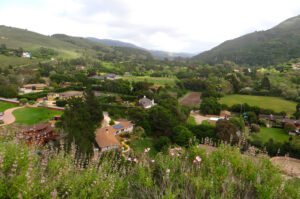
There is a particular hour on the Monterey Peninsula when the light seems to remember every painter who ever chased it. The fog lifts off the water, the cypress throw their crooked shadows across the bluffs, and for a moment the coast looks exactly as it did to the artists who arrived here more than a hundred years ago, easels under their arms, convinced they had found the one place on earth worth painting. This summer, the Monterey Museum of Art invites us to stand inside that continuum. Its season, The Art of Place, is rooted in the light, land, and creative legacy of the Peninsula, and across four exhibitions it traces more than a century of artistry shaped by this singular stretch of coast.
At the heart of it stands a woman whose name deserves to be spoken far more often than it is.
The doyenne who built a colony
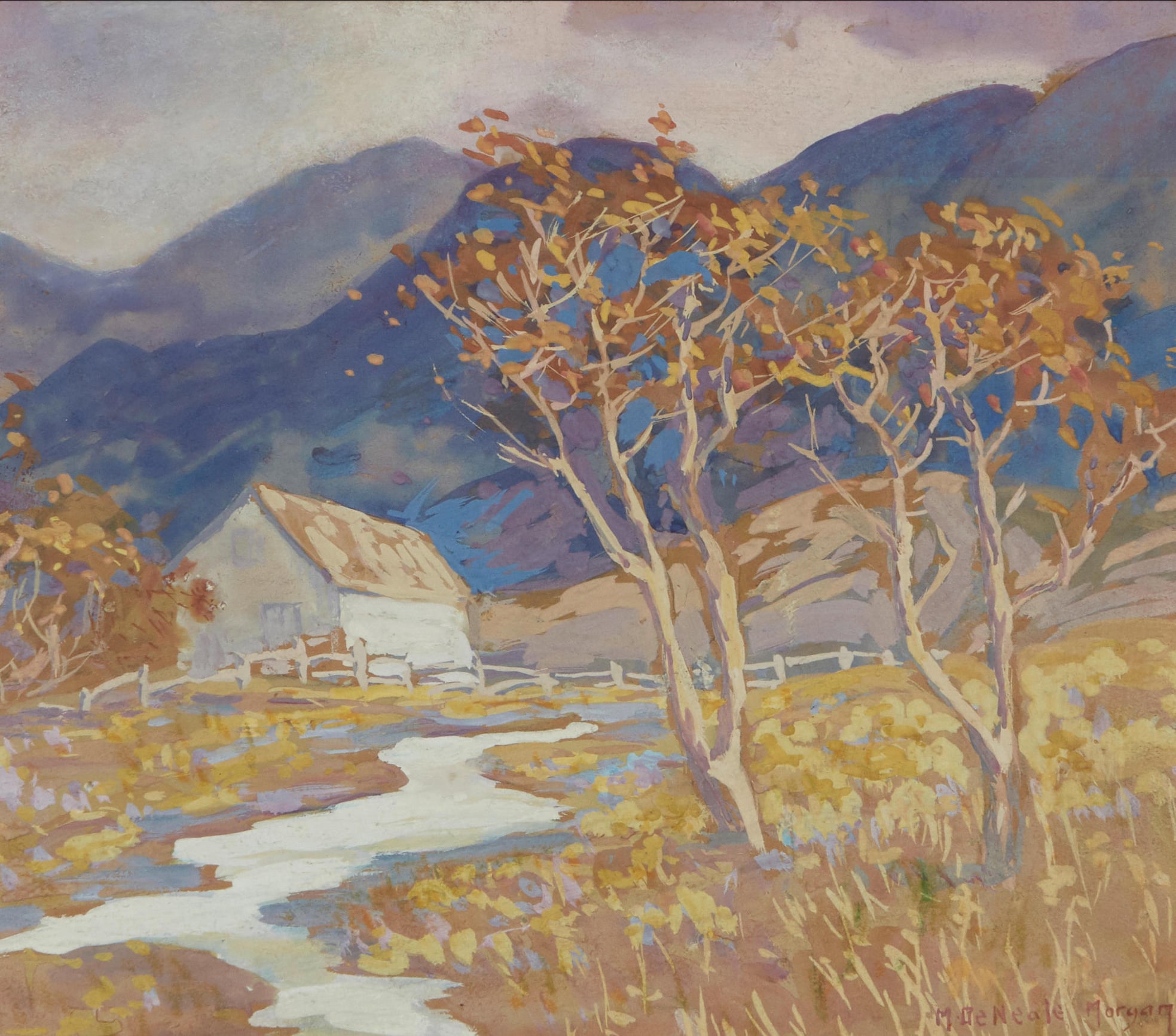
Mary DeNeale: Doyenne of the Carmel Art Colony, on view through August 16, is the largest and most comprehensive retrospective of Mary DeNeale Morgan’s work since a Stanford University exhibition in 1944. Curated by Robert W. Edwards, it gathers the paintings of an artist who did not merely live through the founding of the Carmel art colony but, in large measure, willed it into being.
Morgan (1868–1948) was a California native who arrived in Carmel-by-the-Sea permanently in 1910, at the age of 42. She came, the easy story goes, for the scenery. The truth, as Edwards tells it, is more complicated and more compelling. In an era when a woman’s art education was regarded as a genteel rehearsal for marriage, Morgan wanted something the Bay Area’s fledgling art societies could not offer her: an egalitarian colony, built from scratch, where every regional artist might have an equal wall on which to hang a canvas. When the vast majority of women painters depended on family support, she kept her independence entirely from the sale of her own work.
So she built. She reorganized and expanded the Carmel Arts and Crafts Club into a destination where artists from across the West sought to exhibit. Her art classes drew students from several states. Through sheer managerial gift and a habit of donating her time and her paintings to the community, she helped guide Carmel from a scattering of bohemians into what became the largest and most important art colony on the Pacific Coast. In 1927, she was a charter member of the Carmel Art Association.
And then there is the art itself, which is finally the point. Morgan’s style changed forever after she attended the 1914 William Merritt Chase Summer School of Art in Carmel, where Chase urged her toward a brighter palette, unconventional subjects, and paint laid on thickly with a knife as often as a brush. Her early fame rested on the coast’s wind-tortured cypress, which she rendered not as studies in decay but as portraits of survivors, spirits holding steadfast to life. She refused to explain her process, implying it was something close to mystical. It was the strange, surreal quality of those trees that led George Bellows and Salvador Dalí, during their own visits to Carmel, to seek her out and ask where the most fantastic scenes might be found. A 1931 Pine Cone item reported that she meant to “stick by her cypresses until they sink into the sea.” From the mid-1920s through the late 1930s, no woman painter in Northern California exhibited more work each year than Morgan did.
That such a figure could slip toward the margins of memory says much about how history keeps its ledgers. This retrospective is a graceful correction, and its closing date of August 16 gives Peninsula readers only a short window in which to see it.
Four rooms, one coast
The Art of Place surrounds Morgan with three companion exhibitions, each a different facet of the same enduring subject.
A Visual History of Art and Architecture in Monterey, on view through August 30, sets the long view, tracing how the region’s makers have answered its landscape across generations of paint, print, and building. It is the season’s connective tissue, the room that reminds us Morgan was one voice in a very long conversation.
In Jane Olin: Some Trees, through August 23, that conversation arrives in the present. Olin, a celebrated local photographer known for her pinhole work and inventive silver gelatin processes, turns her lens on the same arboreal forms that so captivated Morgan a century earlier. To move between the two galleries is to watch the Peninsula’s trees pass from oil to emulsion, from one artist’s mysticism to another’s, the subject unchanged and the wonder undiminished.
The season also unveils a new acquisition, Arthur Mathews’ The Bathers, on view through August 23, an addition that deepens the museum’s already remarkable holdings of early California art and anchors the whole endeavor in the tonalist tradition from which Morgan herself first emerged.
Why the light keeps calling
What binds these four rooms is not chronology but a shared conviction, one the Peninsula’s artists have held since the first of them stepped off the train. The land here does not sit still to be copied. It presses upon whoever tries to render it, insists on its own moods, and gives back something larger than a likeness. Morgan understood this better than most. Her cypress were never minor variations on a theme, never Monet’s haystacks catalogued through shifting light. They were, as Edwards writes, self-portraits of her ever-changing moods, rendered in earth tones and sudden brightness, in perspectives that moved from peaceful to unsettling and back.
That is the quiet argument The Art of Place makes across its four exhibitions: that place is not a backdrop but a collaborator, and that the Peninsula has been shaping, and reshaping, its artists for well over a hundred years. To walk these galleries is to feel oneself briefly folded into that lineage, standing where Morgan stood, looking at the trees she refused to abandon, in the same light that has never once stopped calling painters home.
The Monterey Museum of Art is located at 559 Pacific Street in Monterey. Mary DeNeale: Doyenne of the Carmel Art Colony closes August 16, 2026; the companion exhibitions of The Art of Place continue through late August. For hours and details, visit montereyart.org or call 831-372-5477.