By Isabella Ferrante
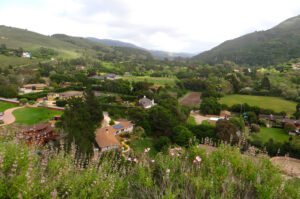
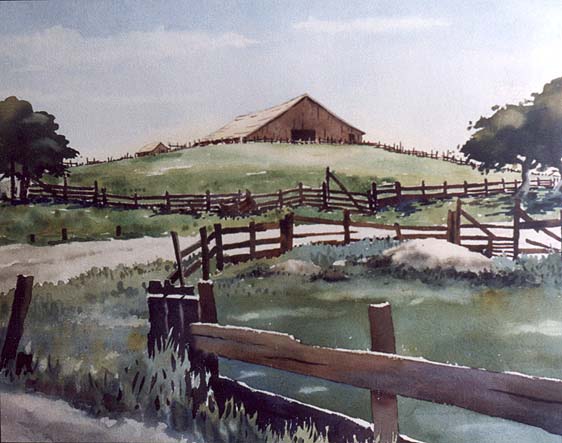
There is a particular quality to the light in Carmel Valley in late July, when the marine fog has burned off and the hills go gold, and the afternoon settles into something unhurried. Drive twelve miles inland from the coast, to the northeastern edge of the Carmel Valley appellation, and the temperature climbs, the oaks thicken, and the road narrows toward a set of gates that have guarded the same rolling ground for the better part of a century. Behind them is Holman Ranch — 750 acres of hills and ancient oaks, a hacienda built in 1928, and a vineyard that makes wine only from what it can grow.
This is the season the estate seems designed for. High summer is rosé weather, and at Holman Ranch the pink wine in the glass is not an afterthought but a full expression of the place: cool-climate fruit grown in the valley’s warm inland pocket, picked by hand, coaxed into something bright and dry and unmistakably coastal. To taste it here, within sight of the vines it came from, is to understand why the growers keep talking about the ground before they talk about the glass.
A land grant, a hacienda, a dream
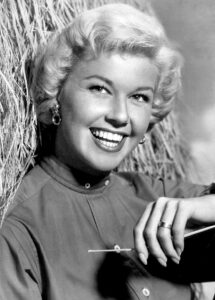
Holman Ranch’s story is, as the estate likes to put it, a piece of California’s own. The land was once part of Rancho Los Laureles, a Mexican land grant that spread across thousands of acres of what is now Monterey County. In 1928, a hacienda rose on the property, and through the following decades the ranch became a private hideaway — a retreat whose guest book, over the years, drew names from Hollywood’s early era. The original hacienda and guest ranch were carefully restored in 2009, and today the 1928 building anchors the estate as both a working tasting space and a setting for weddings and celebrations.
The modern chapter began in 2006, when the Lowder family purchased the ranch to pursue a long-held dream of making estate-grown wine and olive oil. What they built is boutique by design and family in scale: a vineyard planted to Pinot Noir and Chardonnay, with the winemaking guided, in the words of those who tend it, by the old ways. Harvesting is done by hand. No pesticides are used in the vineyard. The approach draws on Burgundian technique and holistic farming, carried out in a state-of-the-art wine cave dug into the hillside. The result is a wine given the freedom to be distinct year to year — a true estate winery, making wine only from what it can grow.
That last phrase matters. “Estate-grown” is a term used loosely across wine country, but at Holman Ranch it is literal. The Pinot Noir and Chardonnay that fill the bottles come entirely from the estate’s own vines, farmed in a corner of the valley where warm days and cool nights lend the fruit both ripeness and tension. Alongside them, the portfolio reaches into Rosé, Pinot Gris, Syrah, and sparkling wine — a range broad enough to reward a slow afternoon of tasting, and focused enough to feel of a single hand.
Two ways to taste
Part of the pleasure of Holman Ranch is that it offers two distinct doors into its world, and they ask different things of a visitor.
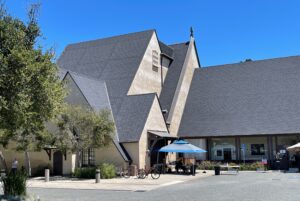
The first is the tasting room in Carmel Valley Village, at 18 West Carmel Valley Road — an easy, walkable stop in the heart of the Village, open Thursday through Monday from noon to six. This is the unhurried introduction: a place to sit with a flight of estate wines, to find the rosé you will want to carry into August, and to fall, as the estate’s team likes to say, for the hospitality before the wine. The Village room keeps its own rhythm of gatherings through the season, from small-bites pairings that set estate wines against a few thoughtful courses to evenings built around the changing table of summer.
The second door lies just up the road, behind those gates. The estate itself is a private property, open by appointment only, and a visit there is a more immersive affair. The Hacienda Tasting seats guests within the 1928 building and its landscaped plaza, overlooking the lower vineyard and the Santa Lucia range beyond, for a tasting of five estate-grown wines. For those who want to see where the fruit begins, the Vineyard Tour and Tasting carries visitors by ATV through the upper vineyards, past rarely seen views of the Santa Lucia Highlands and into the wine caves themselves. There are gentler variations, too — a guided hike that ends underground with a barrel tasting, and a seasonal cheese pairing set on the hacienda patio, drawing on the work of neighboring Carmel Valley makers. Each is a different tempo, but each ends in the same place: a glass of wine within sight of its origin.
The distinction is worth holding onto. The Village tasting room is the open invitation, the easy yes on a summer afternoon. The estate is the deeper acquaintance, arranged in advance, that rewards the drive.
The summer table
Summer is when the estate leans into gathering. The season’s calendar tends toward the restorative and the communal — afternoons of yoga on the ranch followed by estate wine and mountain views, wellness retreats staged in the quiet of the hills, pairing dinners that bring a chef’s hand to the estate’s own bottles. Details shift from year to year, as they should; the reliable constant is the setting, and the wine, and the sense of being folded briefly into something larger and older than the moment.
It is easy, in a valley crowded with tasting rooms, to mistake one for another. Holman Ranch resists that flattening. It is small enough to feel personal, historic enough to feel rooted, and disciplined enough — in its estate-only fruit, its hand farming, its refusal to buy what it can grow — to taste like a single, coherent idea. The CEO, Kirstie Woods, describes the place as a hidden gem, and the phrase, for once, earns itself: you fall in love in the Village, then drive a mile down the road and find there is more.
Pour the rosé cold. Take the afternoon slowly. Twelve miles from the coast, in the gold light of a Carmel Valley July, the grower is standing just behind the glass — which is exactly where the best wines always begin.
Holman Ranch’s tasting room is at 18 West Carmel Valley Road, open Thursday through Monday, noon to six. The estate vineyard and winery, at 60 Holman Road, welcomes guests by appointment. Reservations and current event details are available through holmanranch.com.