By Isabella Ferrante
There is a moment, in the weeks before harvest, when a wine region holds its breath. The clusters have turned — pinot noir gone from hard green to dusky violet, chardonnay warming toward gold — and everything that will define the vintage has essentially been decided. The growers know it. You can feel it driving through any great appellation in late summer: the work is nearly done, the waiting is nearly over, and the land is at its most beautiful. Nowhere is that truer, or less trafficked, than in the Santa Lucia Highlands.
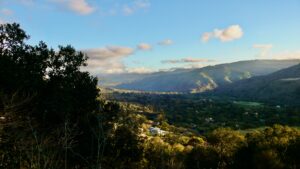
Twenty minutes inland from Carmel, on the western wall of the Salinas Valley, a narrow bench of vineyards runs some eighteen miles along the foothills of the Santa Lucia Range. This is River Road country: a two-lane ribbon threading between the Salinas River and the terraces above, past barns and mailboxes bearing the same names you will find on the wine labels. Rise onto the benchland itself and the view opens — row after row of vines on ancient alluvial terraces of decomposed granite, tilting east toward the morning sun, with the whole quilted floor of the Salinas Valley spread out below.
What makes this place extraordinary is invisible until mid-afternoon, when it arrives on schedule and unmistakably: the wind. The Salinas Valley opens directly onto Monterey Bay, and every day the cold marine air pours inland through that funnel — fog in the morning, hanging low over the vines until the sun burns it back toward the coast, then a stiff, reliable gale by afternoon that sets every leaf in the appellation shivering. Growers elsewhere talk about their cooling influence; here it is practically a member of the family. The paradox of the Highlands is abundant sunshine married to genuinely cold air, and the result is one of the longest, coolest growing seasons in California. Grapes here ripen slowly, keeping their acidity while they build flavor — which is why the pinot noir and chardonnay of the Santa Lucia Highlands carry a tension and energy that warmer places simply cannot counterfeit.
The appellation is both celebrated and surprisingly intimate. Recognized as an American Viticultural Area in 1991 — after grower Nicky Hahn championed the petition — the Highlands today comprise roughly 4,500 planted acres across some 45 vineyards, farmed by about 28 growers. Pinot noir claims the lion’s share of the ground, with chardonnay close behind and a supporting cast of syrah, riesling, and others. The first commercial vines went in back in 1972, but the deeper history is one of farming families who worked this bench for generations before anyone thought to name it: the Pisonis, whose patriarch Gary planted pinot noir high on the slopes and whose sons Mark and Jeff now manage vineyard and cellar; the Franscionis, neighbors and friends, whose Rosella’s Vineyard was planted in 1996 and who joined the Pisonis a year later to plant the fifty acres of Garys’ Vineyard — arguably the most name-checked rows in Monterey County, sought after by winemakers across the state. Dan Morgan Lee of Morgan Winery believed in this bench as early as 1982, and his Double L Vineyard remains the appellation’s only certified organic site. The names on the labels, as the growers like to say, are the names on the mailboxes.
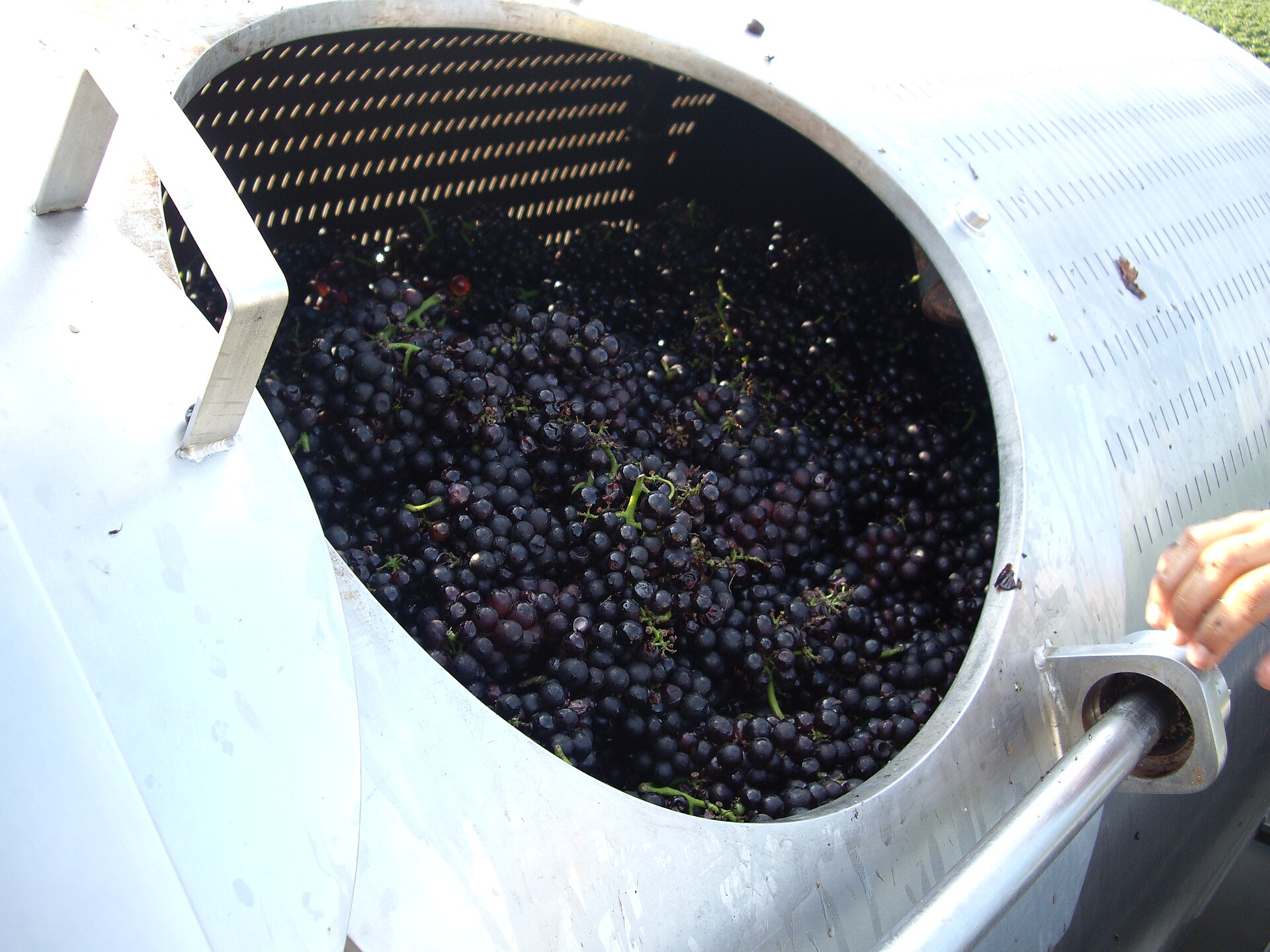
Late summer is when all of that heritage becomes something you can see. Veraison — the turning of the fruit — sweeps through the appellation in August, and the vineyards take on a depth of color they carry at no other time of year: blue-black clusters under silvery leaves, the terraces gold and dry above the still-green river corridor, the light long and low by early evening. The crews walk the rows dropping fruit and pulling leaves, the last adjustments before the picking begins — which here, given the cool season, often stretches later into autumn than almost anywhere else in the state. It is the vineyard equivalent of a kitchen an hour before service: calm, ordered, and humming with what is about to happen.
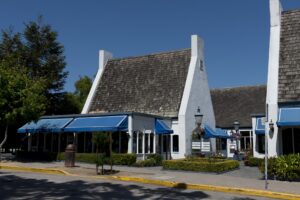
For the visitor, the pleasures are unhurried. The drive itself is the first of them — up River Road from the north or through the vineyards from the south, ideally in the morning before the wind rises, with the fog just lifting off the bench. The wines of the Highlands pour in tasting rooms along the River Road corridor and, closer to home, throughout Carmel-by-the-Sea and Carmel Valley Village, where many of the appellation’s producers keep their doors. A day in the Highlands pairs naturally with lunch in the Valley and an evening back on the coast — the rare wine country excursion that asks nothing more than an afternoon and returns you home by dinner.
And the glass, in the end, is the point. Pour a Highlands pinot noir and the place is all there: dark cherry and forest-floor savor, a saline coolness that reads like the memory of fog, acidity like a drawn bowstring. The chardonnays are cut from the same cloth — concentrated but vivid, rich fruit held taut by the wind that shaped it. These are wines that taste like the argument between sun and ocean that produced them, and once you have stood on the benchland in August with the marine gale in your face, you will never taste them the same way again.
Harvest will come soon enough, with its crush pads and its early mornings and its news. But the Highlands do not need news to justify the drive. They have been doing this — fog, sun, wind, patience — for half a century now, and the weeks before the picking begins remain the most quietly beautiful moment on the Monterey wine calendar. Go before the trucks roll. The vines are heavy, the light is gold, and the whole appellation is holding its breath.
The Santa Lucia Highlands AVA lies along the western edge of the Salinas Valley, roughly 20 to 30 minutes from Carmel. santaluciahighlands.com