By Isabella Ferrante
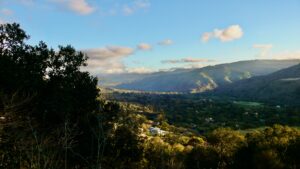
There is a moment, sometime in the last long light of a Carmel Valley August, when a grower walks the rows not to work but to listen. The vines have finished their showing off. The canopy has stopped reaching. What is left is a kind of held breath — sugar climbing quietly inside the fruit, acid softening by the hour, the whole season narrowing toward a single decision that no calendar can make for you. At Folktale Winery & Vineyards, some five miles inland from the Pacific, this is the season when the land does most of the talking, and the people who farm it have learned, above all, how to be quiet and pay attention.
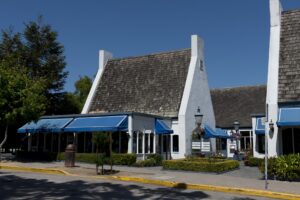
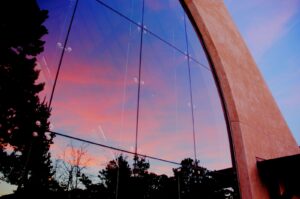
Drive out Carmel Valley Road far enough that the fog begins to thin and the light turns gold, and you will find the winery at 8940, an old-world French chateau settled onto fifteen acres of sustainably farmed vines and gardens along the Carmel River. The building has the confident stillness of something that was built to last and has. It was raised in 1982 by Bob and Patty Brower, who had traveled through Bordeaux and come home determined to bring a little of that unhurried hospitality to the valley. For decades it was Chateau Julien. In 2015 the entrepreneur Gregory Ahn acquired the property, gathered a band of craftspeople around him, and renamed it Folktale — after the oldest idea in wine, that every bottle worth opening carries a story inside it.
The winemaker who came home
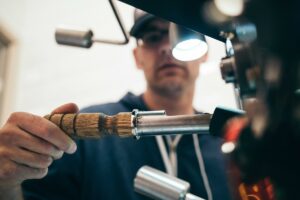
The person who tells that story in the glass is David Baird, Folktale’s head winemaker, and he is very much a product of this coast. He studied winemaking at Cal Poly and then spent years learning the grammar of California fruit the honest way — through other people’s cellars, at Halter Ranch and Edna Valley, at Justin and Fess Parker down in the warmer south. In 2015 he came back to the Monterey Peninsula to build something of his own alongside Ahn, and what the two of them set out to make was never the big, sun-loaded style that flatters a scorecard. It was the opposite: wines that carry the beautiful acid and minerality of Monterey’s cool climate and rocky ground, wines that taste unmistakably of the fog that rolls up the valley most mornings and burns off by noon.
That coastal character is not an accident of marketing; it is a fact of geography. The five acres immediately around the winery are farmed organically, close enough to the tasting tables that a guest can watch the same fruit that will become next year’s Chardonnay ripen a few steps from where this year’s is being poured. The winery also draws on vines farther inland, in the Arroyo Seco and Santa Lucia Highlands, those stony benches of Monterey County where the wind never quite stops and the vines answer by making fruit of real tension and length. Baird works across both: a Sparkling Brut, Chardonnay, Pinot Noir, a dry Rosé the color of a coastal sunrise, and small experiments like the Albariño he pours under the name Seven Spanish Angels. The through line is restraint. These are wines that keep something back, the way the fog does.
The rhythm of the season
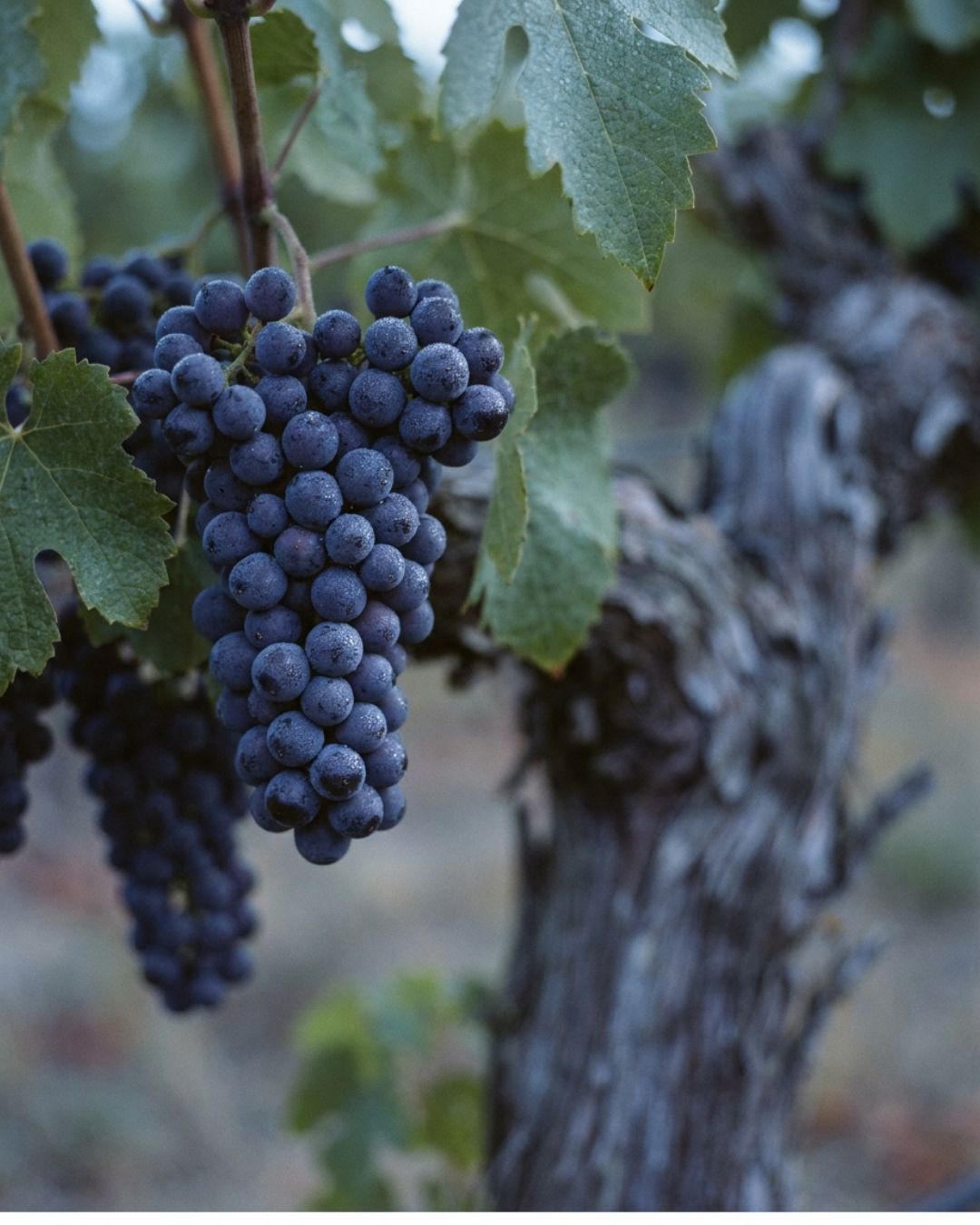
Harvest is the pivot the whole year turns on, and at Folktale it arrives the way it always has in cool country — late, and on the fruit’s own schedule. Pinot leads, as it tends to, its clusters going soft and dark first; Chardonnay follows; the grapes for sparkling come off earliest of all, picked while the acid is still bright and nervy, because that nervousness is exactly what a good sparkling wine is built on. There is no single morning you can circle in advance. Baird and his crew walk the rows tasting seeds and skins, checking numbers, and then one evening the call is made and the work begins before dawn, while the fruit is still cold and the valley is still dark.
For the people who love this place but do not farm it, Folktale has built rituals that let them stand close to that rhythm. The wine club — the heart of the operation in many ways — gathers members through the year for pickup parties timed to the seasons, and the late-summer gatherings are the ones that carry the particular charge of harvest. This is where the phrase first fruit earns its keep: the first tastes of the season’s early pickings, poured for the people who have chosen to follow a single piece of land through its year. Members trade in the tourist’s transaction for something slower and more like belonging — a standing invitation to come back and see how the story is turning out.
A place built for gathering
What keeps Folktale from feeling like a shrine to the harvest is that it was designed, from the start, for people. The Wine Garden experience is the front door — an outdoor setting of vineyard views and long unhurried afternoons. Live music drifts across the tables daily from four to six, and on summer nights the winery opens the rows themselves for its Live in the Vines concert series, staged with the local KRML radio station, where indie-folk duos play as the light goes down over the vineyard. There are dinners in the vines, too, family-style menus from the winery’s culinary team built around whatever the gardens and the coast are giving up that week, each course poured with an estate wine chosen to sit beside it rather than shout over it.
It would be easy to mistake all of this — the music, the long tables, the Rosé in the afternoon sun — for the whole of Folktale. It is not. It is the visible surface of something quieter happening in the rows and the cellar, where a winemaker who grew up on this peninsula is trying, year after year, to catch the exact taste of a cool valley five miles from the ocean and hold it still in a glass. The gathering is the reward. The farming is the work.
Come out this time of year and you can feel both at once. The Wine Garden hums with music and conversation, and a few hundred yards away the fruit hangs heavy and waiting, sugar climbing by the hour toward the morning someone decides it is finally time. That is the real luxury Folktale offers — not the chateau, handsome as it is, but the chance to stand inside a season as it turns, in the company of the people who farm and pour it, and to taste the first fruit before the rest of the world knows the harvest has begun.
Folktale Winery & Vineyards is at 8940 Carmel Valley Road, Carmel. The Wine Garden is open daily; reservations are recommended.