By Vivienne Calloway
There is a particular quality of listening that Carmel teaches. Stand on Scenic Road at dusk and you hear it in layers — the long exhale of the Pacific, the wind combing through the cypress, a gull, a door closing somewhere up the hill. The village has always rewarded people who pay attention with their ears as well as their eyes, which may explain why, for eighty-nine summers, some of the world’s most devoted musicians have gathered here to play Bach.
This year, the Carmel Bach Festival — fifteen days of music, July 11 through 25 — has been built around exactly that idea. The theme of the 89th season is “the nature of sound,” and it is the signature of the remarkable Norwegian conductor who now shapes the festival’s artistic life: Grete Pedersen.
“Our theme, the nature of sound, invites us to listen more deeply,” Pedersen has said of this season, “not only to music, but to the world around us. Carmel offers this in abundance: the Pacific Ocean waves, the wind in the cypress trees, the stillness of the evening. And the cars, the coffee making, and people chatting. All of it becomes part of the festival’s soundscape.”
It is a very Carmel sentiment — and, as it happens, a very old one here.
A Lineage of Listening
The festival was born in 1935, when Dene Denny and Hazel Watrous — two of the great creative forces of early Carmel — launched a four-day series of concerts at the Sunset School Auditorium and the Carmel Mission Basilica. They were not preservationists in any narrow sense. Denny and Watrous embraced modern music wholeheartedly, presenting new works alongside the music of Bach in a village where composers, writers, and painters lived and worked side by side. The festival’s current executive director, Nathan Lutz, has described the 2026 season as a deliberate return to that founding spirit: early music placed in conversation with contemporary voices, in the same key of curiosity and experimentation that defined the town nine decades ago.
Pedersen is, in many ways, the ideal steward of that inheritance. Appointed in the fall of 2022 as the festival’s artistic director and principal conductor — the first woman, and only the sixth artistic director, in the festival’s history — she arrived in Carmel after a career that made her one of the most respected choral conductors in the world. For thirty-five years, from 1990 until 2025, she led the Norwegian Soloists’ Choir, an ensemble whose recordings under her direction earned honors including Gramophone’s Record of the Year. In 2026 she added another distinguished post, becoming principal conductor of the Yale Schola Cantorum and professor of choral conducting at the Yale Institute of Sacred Music.
What Pedersen carries from Norway is not merely technique but a sensibility: a Nordic ease with the border between music and landscape, silence and sound. In her programming, snow, wind, and water are not metaphors so much as materials.
The Season as a Landscape
Consider the opening night. On July 11 at the Sunset Center — and again on July 18 — Pedersen conducts Haydn’s The Seasons, that radiant late oratorio in which an entire agricultural year passes in music: storms, harvests, hunts, the hush of winter. She has paired it, tellingly, with Muohta – Language of Snow by the contemporary Norwegian composer Nils Henrik Asheim, a work whose very title borrows the Sámi vocabulary for snow. Two centuries apart, the same subject; the pairing is the argument.
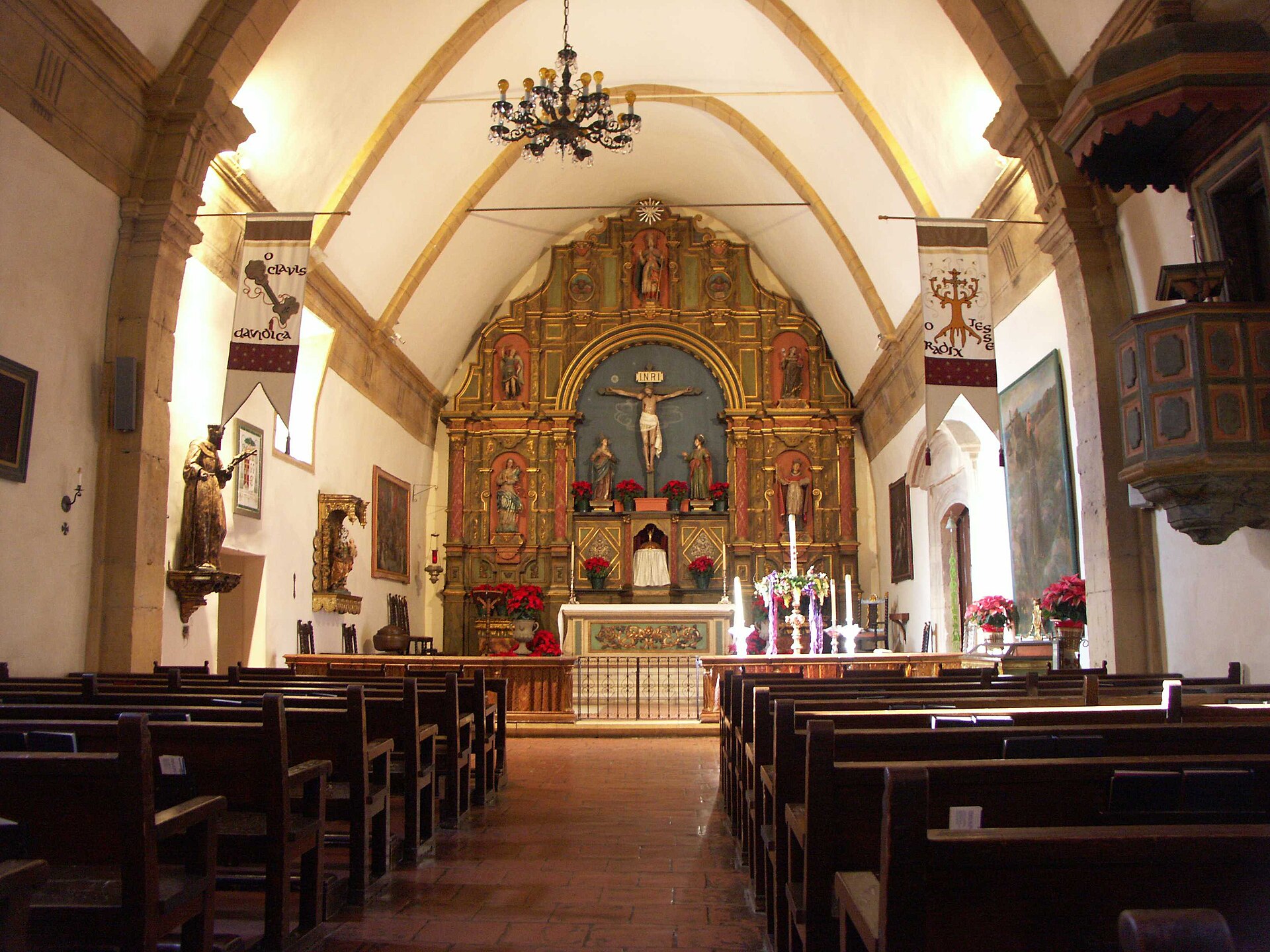
That braiding of old and new runs through the whole fortnight. Pedersen’s second program, “Bach & Rebel,” sets Purcell’s Music for the Funeral of Queen Mary and Jean-Féry Rebel’s astonishing Les Élémens — a Baroque depiction of chaos resolving into the elements — beside Kaija Saariaho’s Nuits, adieux and Sven-David Sandström’s luminous reimagining of Purcell’s Hear My Prayer, O Lord, before arriving at Bach’s Cantata No. 214. Elsewhere, concertmaster Peter Hanson leads an evening of Vivaldi’s Four Seasons and Handel’s Water Music; associate conductor Andrew Megill offers “Bach at Sunset,” with two of Bach’s most humane cantatas and Antonio Lotti’s Missa Sapientiae; and in the candlelit stone of the Carmel Mission Basilica, Megill and the Festival Chorale sing a program that includes Frank Martin’s Mass for Double Choir and Rautavaara’s Die erste Elegie — music that seems written for exactly that reverberant, historic room.
The final main concert belongs again to Pedersen, and it may be the season’s clearest statement: Beethoven’s Symphony No. 6, the “Pastoral,” alongside Copland’s Appalachian Spring and Marejada by Angélica Negrón, the Puerto Rican-born composer the festival has named its Featured Composer this year. Negrón, celebrated for weaving classical writing together with electronics and found sound, incorporated her own recordings of waves and birdsong from the beaches of Puerto Rico into Marejada. One ocean speaking to another, across the length of a continent.
The festival closes on July 25 with “Counterpoint,” in which pianist-composer Conrad Tao and dancer-choreographer Caleb Teicher thread together Bach’s Goldberg aria, Art Tatum, Schoenberg’s ironic waltz, and Gershwin’s Rhapsody in Blue — a reminder that the Bach Festival has never treated its namesake as a boundary, only as a beginning.
The Voices
A festival is finally its performers, and this summer’s roster of vocal soloists is one to savor: soprano Clara Rottsolk, tenor Thomas Cooley, countertenor Reginald Mobley, and baritones Jesse Blumberg and Edward Nelson, appearing across the main concerts with the Festival Orchestra and Chorale. Beyond the Sunset Center, the festival’s musicians fan out across the Peninsula for chamber concerts and free community events in some of the region’s most evocative rooms — the Church in the Forest in Pebble Beach, San Carlos Cathedral in Monterey, even the Henry Miller Memorial Library down the coast in Big Sur, where the redwoods provide the acoustics.
That geography matters. Pedersen’s insight — the one she shares with Denny and Watrous across ninety years — is that in Carmel the concert hall has never really had walls. The fog that slips over Carmel Hill in the late afternoon, the surf you can faintly hear from the Mission courtyard, the pines above the Church in the Forest: all of it is part of the instrument.
The 89th season of the Carmel Bach Festival runs July 11–25, 2026, with performances at the Sunset Center, the Carmel Mission Basilica, and venues throughout the Monterey Peninsula. Programs and tickets at bachfestival.org. And if you find yourself outside the theater at intermission, standing under the trees in the cooling dark — listen. That, too, is the program.