By Vivienne Calloway
There is a moment, just before an August performance at Carmel’s Forest Theater, when the light goes amber and then blue, the pines darken into silhouette, and the audience — wrapped in blankets, cradling cups of something warm — falls quiet of its own accord. No one asks for hush. The place asks for it. And into that expectant stillness, someone steps onto the open stage and begins to speak in the cadences of four centuries ago. This is Shakespeare beneath the pines, and there is nothing else quite like it on the California coast.
For more than three decades, Pacific Repertory Theatre — PacRep to nearly everyone in town — has made the late-summer Carmel Shakespeare Festival one of the enduring pleasures of the season. The company gathers its audiences under the towering trees of the 1910 outdoor Forest Theater, where the stage is framed by living pines and two great stone fireplaces burn against the coastal chill. It is a setting that no proscenium arch could improve upon, and a tradition that reaches back further than the company that now carries it.
A festival revived
The story of Shakespeare in Carmel is older than most of the audience gathered to watch it. The original Carmel Shakespeare Festival was inaugurated in 1940 by Herbert Heron, the poet and civic dreamer who had willed the Forest Theater into being three decades earlier. For a time it flourished, then faded, as such labors of love often do when the founding generation moves on.
It fell to a later dreamer to bring it back. Pacific Repertory Theatre was founded in 1982 by Carmel resident Stephen Moorer, who began by staging productions in modest local halls before turning to the grand outdoor stage that had captivated the town’s imagination for generations. In 1990, PacRep reactivated the old Carmel Shakespeare Festival at the Forest Theater, consciously reaching back to those early days and to Heron’s original vision. The company adopted an idiosyncratic spelling — the “Carmel Shake-speare Festival,” the hyphen a wink toward the old debate over just who wrote the plays — and in doing so signaled that this would be a festival with a scholar’s curiosity as much as a showman’s flair.
What began as an act of revival has become an institution. PacRep now marks more than forty years as a company, and the Shakespeare Festival stands among its signature legacies — a season that, year after year, draws residents and visitors alike into the pines for an evening that feels at once ancient and immediate.
The particular magic of the open air
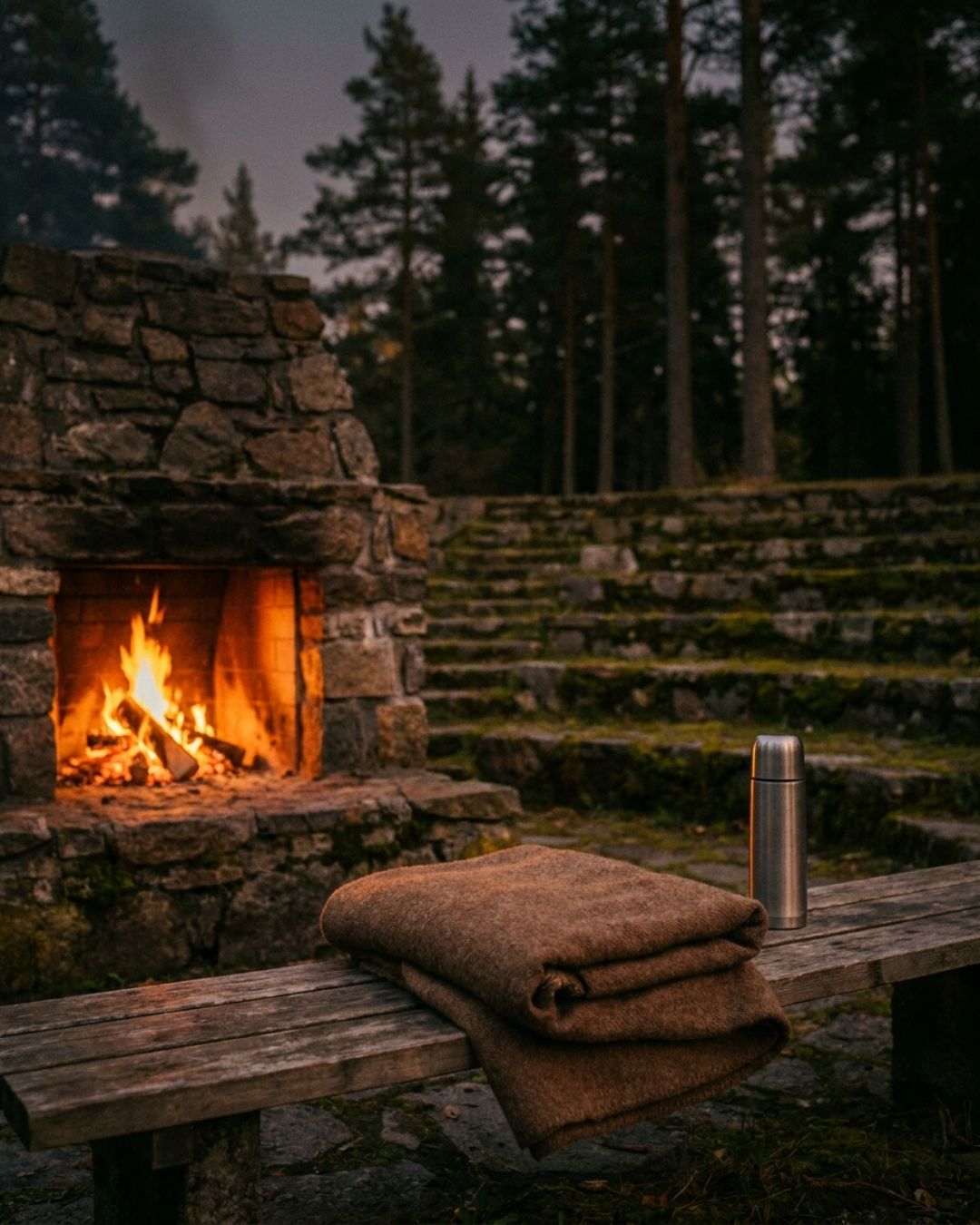
To understand why the festival endures, you have to sit through an evening of it. Indoor theater, for all its polish, seals the audience away from the world; the Forest Theater does the opposite. Here the world is a full participant. Fog drifts in over Carmel and softens the stage lights. A breeze stirs the branches on cue, or maddeningly against it. The temperature drops as the stars come out, which is why the seasoned patron arrives armed with layers, a thermos, and the quiet confidence of someone who has done this before.
The great open fireplaces are part of the ritual — glowing at the edges of the amphitheater, throwing warmth and a flickering, honeyed light across the faces of the crowd. There is something profoundly right about experiencing these plays this way. Shakespeare’s own theater, after all, was an open-air house, its afternoons subject to the same weather and the same daylight that its playwright wrote into the verse. When Oberon and Titania quarrel over the changing seasons in A Midsummer Night’s Dream, and a real evening wind moves through real trees overhead, the line between stagecraft and setting dissolves. The magic is not manufactured. It is simply allowed to happen.
The 540-seat amphitheater, tucked into a residential corner of Carmel-by-the-Sea at Mountain View Avenue and Santa Rita Street, has an intimacy that belies its size. There are no bad seats among the pines, only different vantages on the same shared enchantment. Families spread out on the hillside benches; longtime subscribers return to the same spots season after season; children who once fidgeted through their first comedy grow into adults who bring children of their own. The festival has become, for many Carmel families, a way of marking the years.
A living tradition
PacRep has never treated Shakespeare as a museum piece. Across its Forest Theater seasons the company has ranged widely through the canon — the sunlit comedies that suit a summer evening, the great tragedies that gain a strange gravity under a darkening sky, the histories with their pageantry and their politics. The plays are staged with the conviction that they still have something urgent to say, and that an audience under the stars is uniquely prepared to hear it.
The festival has drawn remarkable talent to this small coastal stage over the years. Long before he became a household name through Hamilton, Daveed Diggs performed with PacRep, appearing as Troilus in the company’s 2008 production of Troilus and Cressida at the Golden Bough Playhouse. The English actress Susannah York brought her solo show The Loves of Shakespeare’s Women to the same stage. Such names are a reminder that the intimate scale of Carmel theater has never meant a modest ambition.
Each August and September, the rhythm repeats: PacRep opens the outdoor season with a family musical, then turns the Forest Theater over to Shakespeare as the evenings lengthen and cool. The company’s 2026 season continues that tradition, with A Midsummer Night’s Dream among its offerings — a fitting choice for a festival built on the enchantment of a summer night. For those planning an evening among the pines, PacRep’s own listings hold the current dates and details, and remain the surest guide to a season that changes each year.
What does not change is the essential experience: the amber light going blue, the fireplaces catching, the pines standing sentinel over words that have outlasted every empire since they were written. To gather here is to take part in something Carmel has been doing, in one form or another, since 1910 — and something PacRep has faithfully kept alive for more than thirty years. Bring a blanket. Come early. Let the stillness settle. Then listen, as the coast holds its breath and the play begins.